


Leveraging the Power of Hemp
and Other Natural Materials

Hemp On
The Field
Hemp and Its Physical Parts
Hemp and Its Chemical Parts
Hemp On The Field
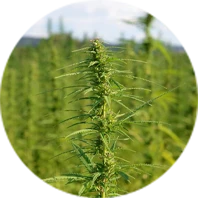
Hemp is a summer crop grown in South Africa typically from early Spring (September and October) and harvested after 90-160 days. It uses 75% less water than cotton and requires no pesticides. An excellent soil ameliorant, hemp also sequesters 8-20 Mt CO2e/ha.
Hemp and Its Physical Parts
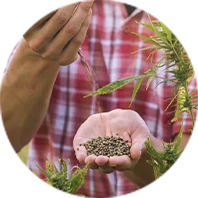
Hemp can be grown for grain (seed), straw (fiber), or inflorescence (flowers and leaves). TexTTan focuses on the straw, which must be mechanically separated into their component physical parts: fibers (short and long) and shivs (inner woody parts) before further processing. It is these separated parts that allow for multi-product development.
Hemp and Its Chemical Parts
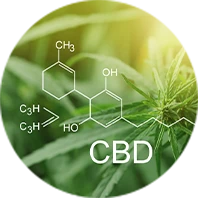
Hemp is made up of cellulose (one of the building blocks of most plants), hemi-cellulose, and lignin, as well as smaller amounts of pectins, waxes, lipids etc. Various extraction processes are used to separate these chemical constituents before further processing.


